A formulation-based look at the Australian Bondi Sands SPF50+ face lotion, its four-filter system, no-added-fragrance formula, sensitive-skin positioning and price per 100 mL.
FORMULA NOTES / SUNSCREEN
Bondi Sands
Everyday Face Sunscreen Lotion SPF50+
Suitable for sensitive skin
A formulation-based review of the Australian 75 mL Bondi Sands Everyday Face Sunscreen Lotion SPF50+ with no added fragrance, associated with AUST L 317890. The brand describes it as suitable for sensitive skin.
A formulation-based review
Full disclosed ingredient inventory
Active ingredients: homosalate 10% w/w, octocrylene 8% w/w, octyl salicylate 5% w/w, butyl methoxydibenzoylmethane 3% w/w. Other ingredients (TGA names): aloe vera, benzyl alcohol, carbomer 941, ceteareth-20, cetostearyl alcohol, citric acid, cyclomethicone, dl-alpha-tocopheryl acetate, hydroxyacetophenone, isopropyl palmitate, maltodextrin, phenoxyethanol, purified water, saccharide isomerate, sodium citrate, sodium stearoyl glutamate, trolamine, white beeswax.
Source: TGA public summary for ARTG 317890, with active concentrations corroborated by Bondi Sands Australia. This is a complete disclosed regulatory inventory of four actives and 18 excipients, not a manufacturer-issued descending-order INCI list. The excipients are alphabetically listed. The Aloe vera preparation and inactive ingredient concentrations are not specified. Match the AUST L number and current pack before relying on this formula.

| The focus |
UVA & UVB protection |
|---|---|
| The format |
75 mL face lotion tube |
| Price snapshot |
A$16.95 |
| Worth knowing |
No added fragrance; suitable for sensitive skin |
An everyday face sunscreen built around a four-filter system
Bondi Sands combines a conventional organic UV-filter system with an emollient lotion base. The Australian 75 mL face product is sold as Everyday Face Sunscreen Lotion and carries no-added-fragrance and four-hour water-resistance claims. Bondi Sands Australia.
Who might it suit?
- Everyday face use: someone looking for a familiar lotion format for facial sun protection.
- Avoiding added fragrance: someone who prefers a sunscreen without a separate perfume declaration. This does not guarantee freedom from irritation or allergy.
- A more emollient base: isopropyl palmitate, fatty alcohol, silicone and beeswax provide a plausible spreading and conditioning system. How rich or shiny it feels is a personal wearing question.
The manufacturer describes this face sunscreen as suitable for sensitive skin, non-comedogenic and lightweight with an invisible finish. These are product claims, not the results of a hands-on wear test for this review. They do not guarantee individual tolerance, freedom from breakouts or comfort around the eyes. Current Australian product description.
What do SPF50+ and broad spectrum mean?
SPF principally describes protection against UV-induced sunburn under standardised testing. Australian SPF50+ labelling requires a test result of at least SPF60. The category is not a measured value for the bottle in your hand and is not permission to stay in the sun longer. TGA SPF testing guidance.
Broad-spectrum protection addresses UVA as well as UVB. No matching numerical UVA-PF or PPD result is assigned here. The label and filter list also do not establish visible-light or infrared protection.
The UV filters and their disclosed percentages
| UV filter | % w/w | Main coverage | Role in the blend |
|---|---|---|---|
| UV filter: homosalate | % w/w: 10% | Main coverage: UVB | Role in the blend: Adds UVB absorption within the oil-phase filter system. |
| UV filter: octocrylene | % w/w: 8% | Main coverage: Mainly UVB, with short-UVA contribution | Role in the blend: Adds UV absorption and provides a plausible stabilising context for avobenzone. |
| UV filter: octyl salicylate / octisalate; INCI ethylhexyl salicylate | % w/w: 5% | Main coverage: UVB | Role in the blend: Adds UVB absorption and oil-phase solvent support. |
| UV filter: butyl methoxydibenzoylmethane / avobenzone | % w/w: 3% | Main coverage: UVA | Role in the blend: The principal dedicated UVA absorber, including long-wave UVA. |

The TGA's 100, 80, 50 and 30 mg/g quantities correspond to 10%, 8%, 5% and 3% w/w. Their 26% total is a formulation fact, not an efficacy score. TGA public summary. Ingredient spectral references: Symrise sun-protection brochure, methanol spectra.
Ingredients grouped by function
Each disclosed ingredient appears once below, under its proposed principal formulation role. Several have secondary functions; this is a reasoned interpretation, not access to the manufacturer's recipe.
| Function | Ingredients | Role in formula |
|---|---|---|
| Function: UV filters | Ingredients: homosalate, octocrylene, octyl salicylate, butyl methoxydibenzoylmethane | Role in formula: Absorb UV in the applied sunscreen film. |
| Function: Emollients and spreading agents | Ingredients: isopropyl palmitate, cyclomethicone | Role in formula: Support spreading, slip and a conditioned surface feel. |
| Function: Emulsifiers | Ingredients: ceteareth-20, sodium stearoyl glutamate | Role in formula: Help incorporate the oil and water components. |
| Function: Structuring materials | Ingredients: cetostearyl alcohol, white beeswax, carbomer 941 | Role in formula: Support body, viscosity and film character; they do not independently prove water resistance. |
| Function: Humectant and carbohydrate support | Ingredients: saccharide isomerate, maltodextrin | Role in formula: Water-binding and formulation support; quantities and exact grades are not supplied. |
| Function: Skin-conditioning adjuncts | Ingredients: aloe vera, dl-alpha-tocopheryl acetate | Role in formula: Botanical material and a vitamin E derivative; preparation and concentration limit skin-benefit claims. |
| Function: Preservation and formula protection | Ingredients: phenoxyethanol, benzyl alcohol, hydroxyacetophenone | Role in formula: A plausible preservation-support system. Hydroxyacetophenone can also support oxidation control. |
| Function: pH adjustment and buffering | Ingredients: citric acid, sodium citrate, trolamine | Role in formula: Help manage pH and polymer behaviour; actual product pH is not disclosed. |
| Function: Aqueous carrier | Ingredients: purified water | Role in formula: The water component of the lotion. |
All four actives and 18 excipients are accounted for. The TGA name cetostearyl alcohol corresponds to cetearyl alcohol, a fatty alcohol rather than ethanol. Trolamine is triethanolamine. The registry does not identify the precise Aloe vera material or cyclomethicone composition, so neither is replaced with a guessed ingredient subtype.
The key ingredients, explained
| Ingredient | What it contributes |
|---|---|
| Ingredient: avobenzone | What it contributes: Dedicated UVA absorption. Its stability depends on the complete formula. |
| Ingredient: homosalate + octocrylene + octisalate | What it contributes: Complementary mainly UVB absorption. Octocrylene can help stabilise avobenzone in suitable systems, but this is not a quantified test of this lotion. |
| Ingredient: saccharide isomerate | What it contributes: A humectant rationale alongside sun protection. Its presence alone does not establish a specific number of hours of hydration. |
| Ingredient: isopropyl palmitate + cyclomethicone | What it contributes: Oil-phase spreading and emollient support. A single ingredient cannot predict whole-product comedogenicity. |
| Ingredient: cetostearyl alcohol + beeswax + carbomer | What it contributes: Texture and film-support ingredients. Water resistance remains a finished-product claim. |
| Ingredient: tocopheryl acetate | What it contributes: A vitamin E ester, not free tocopherol. Do not transfer free-vitamin-E antioxidant findings directly to this sunscreen. |
| Ingredient: aloe vera | What it contributes: A disclosed botanical adjunct, without enough preparation detail to equate it with a particular leaf juice, powder or extract study. |
The protective film matters as much as the filter list
The lotion's design is consistent with dispersing oil-soluble filters through a water-containing, structured vehicle. Emollients and silicone support spreading, emulsifiers help organise the phases, and fatty alcohol, wax and polymer can help create a coherent film. These are plausible ingredient functions, not measurements of film uniformity, crystallisation control or wear.
Avobenzone needs a suitable formulation environment because it can lose performance under irradiation when unstabilised. Octocrylene makes a sensible ingredient-level partner, but a matching irradiation-retention study would be needed to quantify the stability of this exact product. Neither a guarantee of complete photostability nor a claim that the lotion is unstable is justified from the list alone.
Reading the claims carefully
- SPF50+ and UVA/UVB protection: documented product claims. The public regulatory ingredient record is not an independent test report for the current bottle.
- Four-hour water resistance: a tested-duration label claim, not a four-hour application schedule or proof of towel resistance.
- No added fragrance: useful positioning, but benzyl alcohol remains in the disclosed preservation system. Fragrance avoidance does not eliminate every possible sensitivity.
- Suitable for sensitive skin, non-comedogenic and invisible finish: manufacturer descriptions; tolerance, breakouts, shine and eye comfort vary between people. The review has not independently wear-tested these claims.
Directions and cautions
Shake before use. Apply generously and evenly 20 minutes before exposure. Reapply at least every two hours and after swimming, sweating or towelling. Combine sunscreen with shade, clothing, a broad-brimmed hat and sunglasses, and avoid prolonged sun exposure. Bondi Sands directions.
Cancer Council's general guide for an average adult is about one teaspoon, or 5 mL, for the face, neck and ears. Apply enough to cover those areas evenly rather than stretching a small amount to make the tube last. Follow the current pack directions. Cancer Council application advice.
Patch test as directed by the brand; stop if irritation develops. Avoid eye contact; if contact occurs, rinse thoroughly with clean running water. Do not apply to broken, damaged or diseased skin. Store below 30°C and check expiry. Follow current pack age guidance rather than assuming that sensitive-skin positioning means infant suitability. Australian product directions and cautions.
What published sunscreen research tells us
Consistent use matters for photoageing
In a randomised Australian study of 903 adults younger than 55, daily sunscreen use was associated with 24% lower relative odds of increased skin ageing over 4.5 years than discretionary use. The estimate had uncertainty and some outcome data were missing. This supports a regular sunscreen habit; it was not a trial of Bondi Sands. Hughes and colleagues, 2013.
Practical use matters more than counting filters
A sunscreen that is comfortable enough to apply generously and reapply may be more useful in practice than one chosen only for its ingredient count. This lotion's tube size, price and no-added-fragrance positioning are practical considerations. They do not replace the dose, reapplication and wider sun-protection measures in official guidance. Cancer Council sunscreen advice.
Our assessment
Bondi Sands Everyday Face Sunscreen Lotion SPF50+ combines a four-filter UVA/UVB design with a structured, emollient base in a 75 mL tube. Its practical features include disclosed active percentages, no added fragrance, a four-hour water-resistance claim and manufacturer positioning for sensitive skin. The ingredient list supports the formulation rationale without demonstrating an exact UVA-PF, individual tolerance or all-day wear.
At the official Australian price of A$16.95, the cost is A$22.60 per 100 mL, or A$2.26 per 10 mL, before any shipping. Chemist Warehouse displayed A$15.49 for 75 mL on the review date, equivalent to about A$20.65 per 100 mL. These are dated price snapshots, not a market-wide cheapest-price claim. Brand price; Chemist Warehouse price.
The current official face pack shows AUST L 317890. Its complete disclosed inventory comes from the matching TGA record rather than a manufacturer-issued ordered INCI list, and inactive ingredient concentrations are not provided. The sensitive-skin and non-comedogenic claims are useful selection cues, but individual tolerance still needs to guide use. Maintain an adequately applied film and reapply on schedule, regardless of the four-hour water-resistance wording.
Further reading
- Bondi Sands Australia: SPF50+ Everyday Face Sunscreen Lotion
- TGA: ARTG 317890
- TGA: complete active and excipient inventory
- Chemist Warehouse: 75 mL Australian face sunscreen
- Symrise: UV-filter reference spectra
- TGA: SPF testing information
- Cancer Council: choosing, applying and storing sunscreen
- Hughes et al. Sunscreen and prevention of skin aging
Products for Dry & Dehydrated Skin
-
Regular price$79.00 AUDRegular price
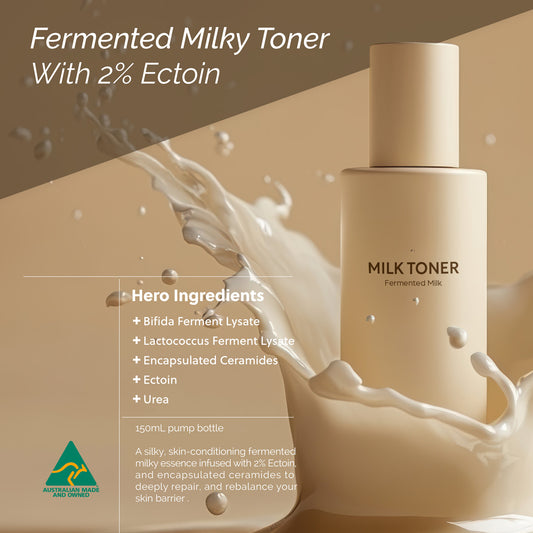
$0.00 AUDSale price$79.00 AUD Save $-79.00 AUD (%)Unit priceperFermented Milky Toner
-
Regular price$59.00 AUDRegular priceSale price$59.00 AUD Save $-59.00 AUD (%)Unit priceper
Daily Face Hydrator
-
Regular price$36.00 AUDRegular priceSale price$36.00 AUD Save $-36.00 AUD (%)Unit priceper
Gel Cleanser
-
Regular price$55.00 AUDRegular priceSale price$55.00 AUD Save $-55.00 AUD (%)Unit priceper
Milk Cleanser
-
Regular price$69.00 AUDRegular priceSale price$69.00 AUD Save $-69.00 AUD (%)Unit priceper
Water Bomb Face Cream
-
Regular price$39.00 AUDRegular priceSale price$39.00 AUD Save $-39.00 AUD (%)Unit priceper
Green Envy AHA Serum