Westman Atelier Suprême C Vitamin C Concentrate contains one ingredient: tetrahexyldecyl ascorbate. We explain what its 100% claim means, explore the research and consumer testing, and consider its texture, suitability and value.
FORMULA NOTES / VITAMIN C SERUM
Westman Atelier
Suprême C Vitamin C Concentrate
A closer look at its single-ingredient vitamin C formula, gel-oil texture, consumer testing and who it might suit.
A formulation-based review
Full ingredient list (INCI)
tetrahexyldecyl ascorbate
Source: Westman Atelier’s full ingredient list, checked 30 October 2026. The brand identifies this as a single-ingredient formula; MECCA lists the same INCI.

The focus
Brightness, even-looking tone & softness
The format
20 mL refillable bottle · gel-oil
Price snapshot
A$534MECCA listing · out of stock online when checked
Worth knowing
100% THD ascorbate · one ingredient
A single vitamin C derivative is the entire formula
Westman Atelier Suprême C takes an unusually minimalist approach: its only listed ingredient is tetrahexyldecyl ascorbate, an oil-soluble vitamin C derivative commonly shortened to THD ascorbate. There is no water phase, fragrance or supporting active blend. The same ingredient supplies both the treatment focus and the serum’s distinctive gel-oil character.
That makes this a useful example of why the percentage on a vitamin C bottle needs context. The 100% figure describes the derivative itself, rather than free L-ascorbic acid. Suprême C is best understood as a concentrated, single-material treatment for someone who prefers a nourishing oil-like finish and a very short ingredient list.
Who might it suit?
- People who prefer minimalist formulas: there is one declared ingredient, making it straightforward to identify what is being applied.
- Normal or dry-feeling skin: its gel-oil format may appeal when a richer surface feel is welcome.
- Dull or uneven-looking skin: brightening and tone support are its primary treatment goals.
- Those avoiding added fragrance: the formula contains no parfum or aromatic essential oils.
A single ingredient does not guarantee individual tolerance. Start gradually if your skin is reactive. If you prefer lightweight, water-based serums or have very oily skin, the texture may be less appealing. Apply a small amount after cleansing or after a lighter hydrating serum, then allow it to absorb. Use broad-spectrum sunscreen in the morning.
What does 100% vitamin C mean here?
100% tetrahexyldecyl ascorbate means the formula consists of the oil-soluble vitamin C ester. It is not 100% free L-ascorbic acid, and the number cannot be compared directly with a 10–20% L-ascorbic acid serum as a measure of strength or expected results.
THD is used as a vitamin C precursor. Delivery, conversion within skin and the surrounding formulation affect its performance. Increasing the percentage does not establish a proportional increase in benefit. With no aqueous phase, this also is not a conventional low-pH, water-based vitamin C serum.
Ingredients grouped by function
Ingredients are grouped by their estimated primary role in this formula; some ingredients have more than one function.
| Function | Ingredients | Role in formula |
|---|---|---|
| Function: Primary Active | Ingredients: tetrahexyldecyl ascorbate | Role in formula: Oil-soluble vitamin C derivative selected for brightening and antioxidant-oriented support. As the sole ingredient, it also supplies the gel-oil vehicle and skin-conditioning feel. |
The key ingredients, explained
| Ingredient | What it contributes |
|---|---|
| Ingredient: Tetrahexyldecyl ascorbate · 100% | What it contributes: Oil-soluble vitamin C in a single-ingredient format. THD ascorbate is an ester of ascorbic acid used for radiance, uneven-tone and antioxidant-focused skincare. Here it is the whole formula, rather than one component of an emulsion. Its oil-like feel can soften the skin’s surface, but the formula has no separate humectant or barrier-lipid system. |
When the active ingredient is also the vehicle
In a conventional serum, water, solvents, emulsifiers and other supporting ingredients help determine how an active is delivered. Suprême C removes that complexity by using THD alone. This is a deliberate formulation choice rather than an ingredient list that needs to be longer to be worthwhile.
The trade-off is a narrower set of functions. Someone seeking water-binding hydration, ceramides or several complementary antioxidants would obtain those elsewhere in their routine. For this product, the important questions are how the neat material performs on skin, whether the texture suits the user and whether the experience justifies the premium price.
Product clinical and consumer testing
Eight-week consumer study
Westman Atelier reports a consumer study involving 30 participants over eight weeks. At the end, all participants reported a more even-looking complexion; 93% reported greater brightness and 93% reported reduced visibility of dark spots or hyperpigmentation. These are participant perceptions, not percentages of pigment removed or measured collagen growth. Brand study summary.
The brand also describes dermatologist and clinical testing, but does not publish a detailed controlled trial report alongside these results. Its comparative absorption and rapid-conversion statements are not supported there by an accessible matched-product study, so they are not used here as proof that Suprême C outperforms other vitamin C serums.
What ingredient research tells us
These studies help explain interest in THD ascorbate. They did not test Westman Atelier Suprême C and should be read separately from its consumer study.
A clinical study of a different THD-containing serum
A 2024 open-label study followed 35 adults aged 21–55 using a THD ascorbate and acetyl zingerone serum for 12 weeks. Improvements in pigmentation, fine lines, skin smoothness and several skin measurements were reported against baseline. There was no vehicle-control group, and the formula contained multiple ingredients. It therefore supports further investigation of THD-containing formulations, rather than establishing the effect of neat THD or the performance of this product. Min and colleagues, 2024.
Stability depends on the conditions being tested
Laboratory research found that THD degraded under a singlet-oxygen challenge and that acetyl zingerone improved its stability and some biological responses. Acetyl zingerone is not present in Suprême C. These findings do not establish the shelf stability of this bottle, but they show why “stable vitamin C” is not a universal claim covering every environment or oxidative challenge. Swindell and colleagues, 2021.
Our assessment
Suprême C offers ingredient transparency, with 100% tetrahexyldecyl ascorbate (THD Ascorbate) in a gel-oil format. However, at A$534 for 20 mL, the price is prohibitive and, in our view, arguably unrealistic for a single-ingredient product. Its simplicity may appeal, but neither ingredient minimalism nor an exceptionally high concentration provides a convincing justification for this price.
The 100% headline is particularly unpersuasive as a measure of performance. The evidence presented does not establish a clinical justification for using THD Ascorbate at 100%, or demonstrate that this concentration delivers better brightening or antioxidant results than lower-concentration formulas. Encouraging consumer feedback can indicate satisfaction, but it does not establish that 100% is an optimal concentration or that this product outperforms more affordable alternatives.
THD Ascorbate may have a place in a well-considered skincare routine, but the presence of this active alone does not justify a A$534 price tag. Texture, minimalism and personal preference may explain Suprême C’s luxury appeal; the formulation and evidence presented do not make a persuasive case for its value.
Further reading
Products for Dry & Dehydrated Skin
-
Regular price$49.00 USDRegular price
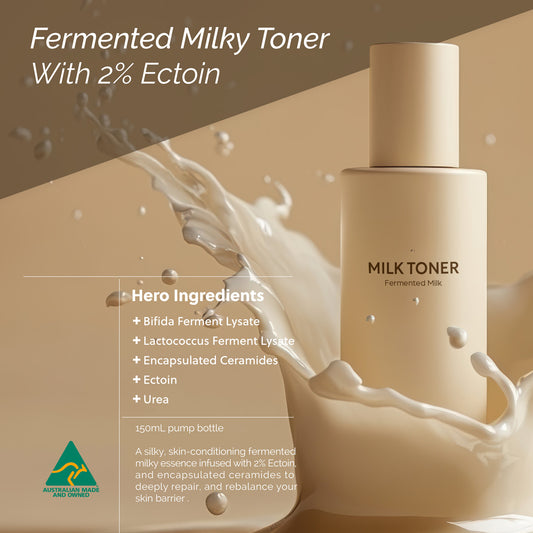
$0.00 USDSale price$49.00 USD Save $-49.00 USD (%)Unit priceperFermented Milky Toner
-
Regular price$37.00 USDRegular priceSale price$37.00 USD Save $-37.00 USD (%)Unit priceper
Daily Face Hydrator
-
Regular price$22.00 USDRegular priceSale price$22.00 USD Save $-22.00 USD (%)Unit priceper
Gel Cleanser
in your cart -
Regular price$34.00 USDRegular priceSale price$34.00 USD Save $-34.00 USD (%)Unit priceper
Milk Cleanser
-
Regular price$43.00 USDRegular priceSale price$43.00 USD Save $-43.00 USD (%)Unit priceper
Water Bomb Face Cream
-
Regular price$24.00 USDRegular priceSale price$24.00 USD Save $-24.00 USD (%)Unit priceper
Green Envy AHA Serum