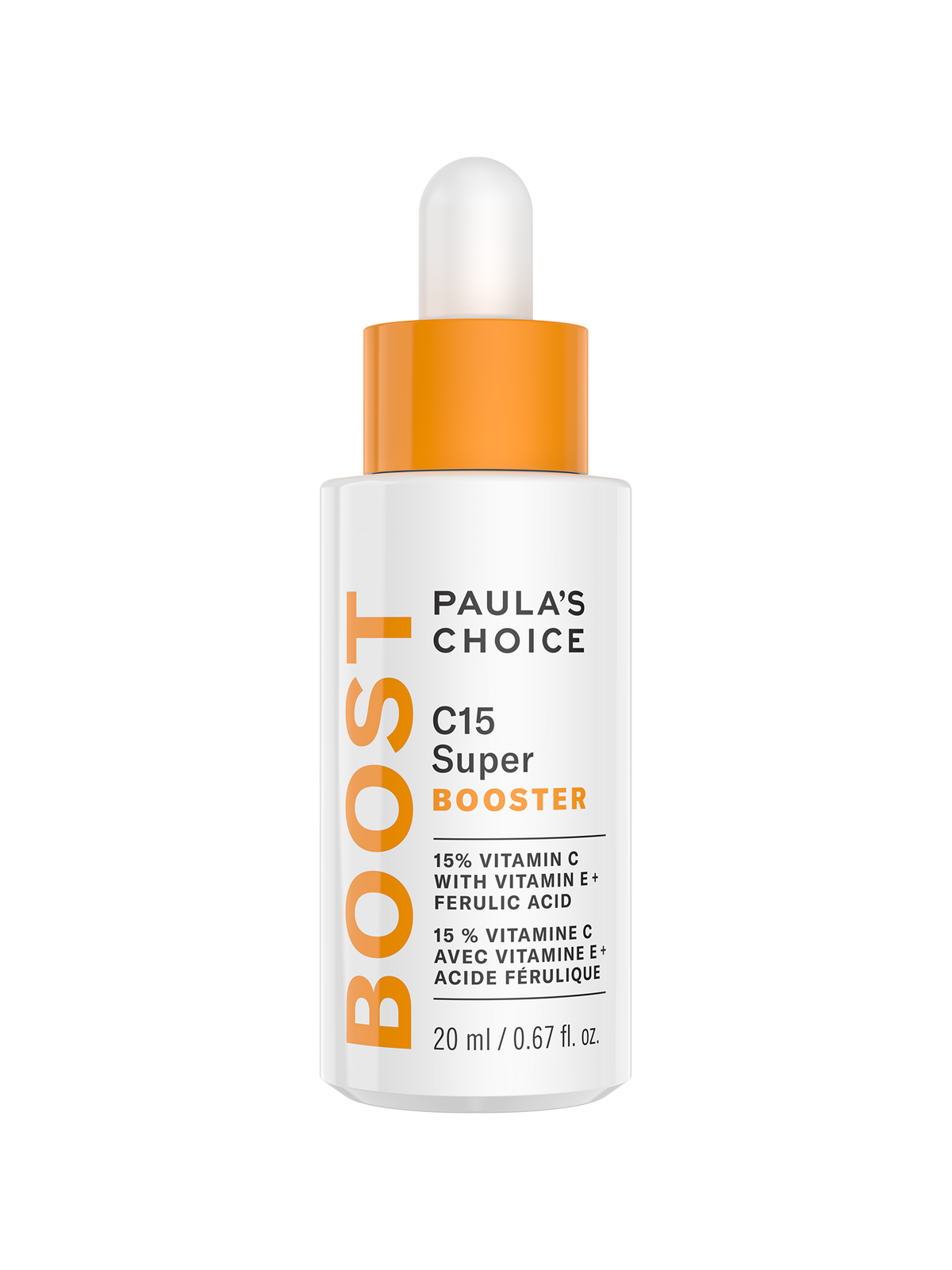
The current Australian C15 formula combines 15% L-ascorbic acid with ferulic acid and tocopherol. Glycerin and glycols support hydration, while bisabolol adds a skin-conditioning, soothing role. This review concerns the current listed formula, not an older C15 ingredient list.
FORMULA NOTES / VITAMIN C
Paula’s Choice C15 Brightening Super Booster
A closer look at 15% ascorbic acid, its supporting ingredients and who the formula might suit.
A formulation-based review
Full ingredient list (INCI)
water/aqua/eau, ascorbic acid, dipropylene glycol, propanediol, glycerin, ethoxydiglycol, sodium hydroxide, ppg-26-buteth-26, peg-40 hydrogenated castor oil, bisabolol, ferulic acid, sodium phytate, decylene glycol, tocopherol, 1,2-hexanediol, sphingomonas ferment extract, phenoxyethanol
Source: Official product information, checked 1 November 2026. Check your packaging for formula changes.
| Product | Formulation Rating | Value Rating | Overall Rating |
|---|---|---|---|
| Paula’s Choice15% L-ascorbic acidA$84.00 · 20 mL |
★★★★☆Antioxidant
★★★★☆Pigment Signalling
★★★★★Hydration
|
A$42.00 per 10 mL; concentration-adjusted component uses 15% L-ascorbic acid. |
A lightweight antioxidant and hydration system
The current Australian C15 formula combines 15% L-ascorbic acid with ferulic acid and tocopherol. Glycerin and glycols support hydration, while bisabolol adds a skin-conditioning, soothing role. This review concerns the current listed formula, not an older C15 ingredient list.
Who might it suit?
- Dullness and uneven-looking tone: for someone seeking a disclosed ascorbic acid treatment.
- A lightweight routine: suitable for people who prefer a thin serum under moisturiser.
- Antioxidant-focused care: a supporting step alongside daily sunscreen, not a substitute for it.
Acidic vitamin C can still sting or irritate, even when a formula is marketed as gentle. Introduce gradually and stop if persistent irritation develops. Official product information.
What does the 15% refer to?
The disclosed 15% refers to L-ascorbic acid, the unmodified form of vitamin C. It is not a combined vitamin C complex or a derivative percentage. Supporting ingredient levels are not all disclosed, so their concentrations cannot be calculated from INCI order. Official product information.
Listed pH: 3.10–3.50.
Ingredients grouped by function
Ingredients are grouped by their estimated primary role in this formula; some ingredients have more than one function.
| Function | Ingredients | Role in formula |
|---|---|---|
| Function: Primary Actives | Ingredients: ascorbic acid, bisabolol | Role in formula: Ascorbic acid anchors the treatment; bisabolol provides supporting skin-conditioning and soothing activity. |
| Function: Antioxidants | Ingredients: ferulic acid, tocopherol | Role in formula: Ferulic acid and tocopherol complement ascorbic acid. |
| Function: Humectants & Hydration Actives | Ingredients: propanediol, glycerin, decylene glycol | Role in formula: Propanediol, glycerin and decylene glycol support water binding and feel. |
| Function: Solvents | Ingredients: water/aqua/eau, dipropylene glycol, ethoxydiglycol | Role in formula: The aqueous glycol system dissolves and distributes the formula. |
| Function: Solubilizers | Ingredients: ppg-26-buteth-26, peg-40 hydrogenated castor oil | Role in formula: Support incorporation of ingredients with differing solubility. |
| Function: Preservatives & Antimicrobial Agents | Ingredients: 1,2-hexanediol, phenoxyethanol | Role in formula: Preservation and supporting antimicrobial function. |
| Function: Chelating Agents | Ingredients: sodium phytate | Role in formula: Binds metal ions to support formulation stability. |
| Function: pH Adjusters / Buffers | Ingredients: sodium hydroxide | Role in formula: Adjusts the finished product’s acidity. |
| Function: Texturisers & Rheology Agents | Ingredients: sphingomonas ferment extract | Role in formula: Film-forming and skin-conditioning support. |
The key ingredients, explained
| Ingredient | What it contributes |
|---|---|
| Ingredient: L-ascorbic acid · 15% | What it contributes: The central antioxidant ingredient and a cofactor in collagen-related biology. Topical performance still depends on the vehicle and stability. |
| Ingredient: Ferulic acid | What it contributes: A complementary phenolic antioxidant. Inclusion supports the design rationale without proving the exact synergy of a different tested formula. |
| Ingredient: Vitamin E | What it contributes: Lipid-phase antioxidant support. The label lists tocopherol without establishing the precise isoform composition. |
| Ingredient: Glycerin and glycols | What it contributes: Support water binding and a light feel. |
| Ingredient: Bisabolol and Sphingomonas ferment extract | What it contributes: Soothing/conditioning and film-forming support respectively; neither guarantees tolerance or a microbiome benefit. |
An acidic antioxidant serum with supporting humectants
The aqueous solvent system keeps the texture light, while glycerin and glycols contribute water binding. Bisabolol is a useful supporting choice for comfort, but does not guarantee that a 15% acidic serum will suit reactive skin. Sphingomonas ferment extract is a film-forming and conditioning component; its presence is not evidence of a clinically demonstrated microbiome effect.
Reading the claims carefully
The brand reports expert-graded testing in 30 participants after four weeks and instrumental hydration testing in 31 participants after one week. The public summary does not provide full controlled results. Its suitability and non-irritation claims describe the tested conditions, rather than guaranteeing tolerance in every user. Vitamin E and ferulic acid percentages are not disclosed. Official product information.
What published vitamin C research tells us
These studies examined other formulations; they support ingredient rationale, not a claim that this serum has the same measured results.
Topical vitamin C and photoaged skin
A six-month placebo-controlled study of 5% vitamin C cream reported improvements in skin-surface and clinical measures. It used a different vehicle and concentration. Humbert et al., 2003.
Ascorbic acid and facial skin texture
A three-month split-face trial in 19 evaluable participants found improvements with another commercial serum versus vehicle. Its small sample and limited skin-type range constrain generalisation. Traikovich, 1999.
Our assessment
C15 offers a clearly disclosed ascorbic acid concentration and pH with a purposeful light hydration system. At the comparison snapshot price of A$84 for 20 mL, it costs A$42.00 per 10 mL. Its 3-star Value Rating places it in the middle of this comparison’s price-and-concentration value range. The smaller bottle should be considered alongside the headline price; texture, tolerance and moisture support matter more than assuming a premium price produces stronger results.
This serum earns an Overall Rating of 3.42 stars in our comparison of 15 ascorbic acid vitamin C serums.
Prices use the comparison snapshot of 1 November 2026; temporary promotions are excluded. Ratings are editorial assessments of formulation potential and value, not measured clinical outcomes.
Further reading
Products for Dry & Dehydrated Skin
-
Regular price$79.00 AUDRegular price
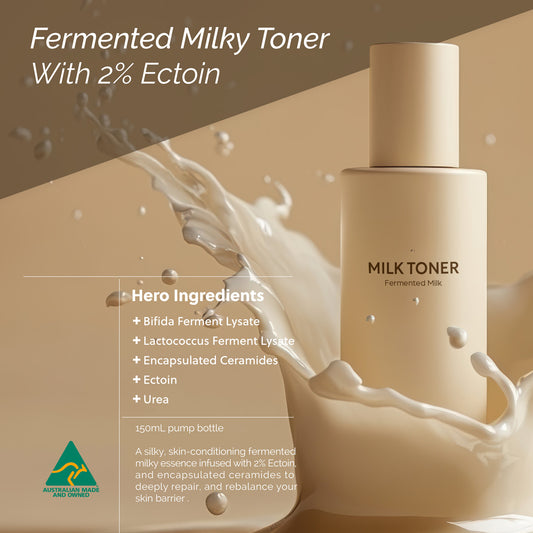
$0.00 AUDSale price$79.00 AUD Save $-79.00 AUD (%)Unit priceperFermented Milky Toner
-
Regular price$59.00 AUDRegular priceSale price$59.00 AUD Save $-59.00 AUD (%)Unit priceper
Daily Face Hydrator
-
Regular price$36.00 AUDRegular priceSale price$36.00 AUD Save $-36.00 AUD (%)Unit priceper
Gel Cleanser
-
Regular price$55.00 AUDRegular priceSale price$55.00 AUD Save $-55.00 AUD (%)Unit priceper
Milk Cleanser
-
Regular price$69.00 AUDRegular priceSale price$69.00 AUD Save $-69.00 AUD (%)Unit priceper
Water Bomb Face Cream
-
Regular price$39.00 AUDRegular priceSale price$39.00 AUD Save $-39.00 AUD (%)Unit priceper
Green Envy AHA Serum