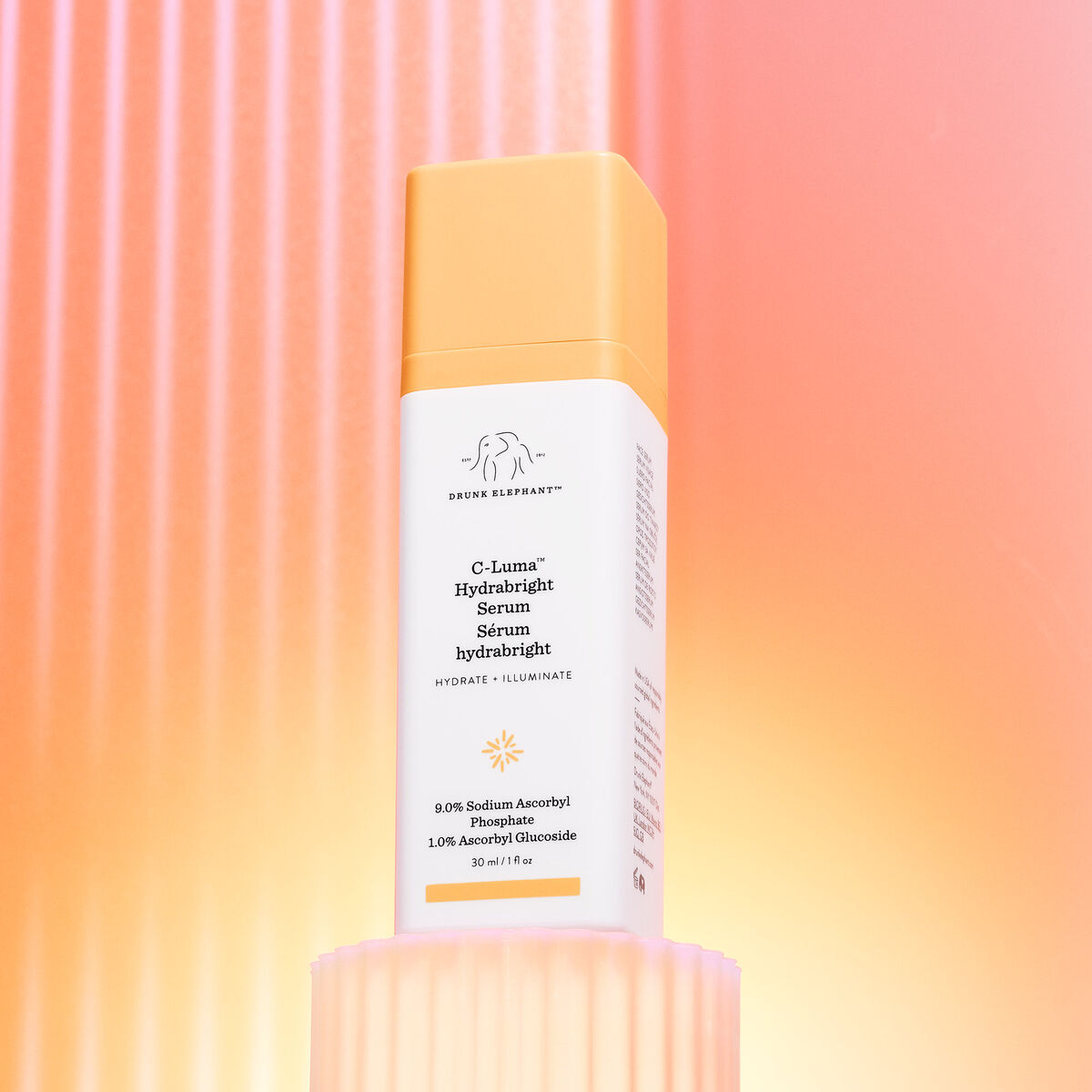
Drunk Elephant C-Luma Hydrabright Serum combines 9% sodium ascorbyl phosphate and 1% ascorbyl glucoside with supporting antioxidants and a moisturising base. We explore its ingredients, explain the product testing and consider who this vitamin C serum might suit.
FORMULA NOTES / VITAMIN C SERUM
Drunk Elephant
C-Luma Hydrabright Serum
A closer look at its two vitamin C derivatives, supporting antioxidants and moisture-focused formula.
A formulation-based review
Full ingredient list (INCI)
water/aqua/eau, propanediol, sodium ascorbyl phosphate, glycerin, isodecyl neopentanoate, squalane, neopentyl glycol diheptanoate, c9-12 alkane, sodium polyacryloyldimethyl taurate, ascorbyl glucoside, coco-caprylate/caprate, sclerocarya birrea seed oil, pullulan, sclerotium gum, diglucosyl gallic acid, sorbitan sesquiisostearate, glutathione, sodium hyaluronate, sorbeth-30 tetraisostearate, dipropylene glycol, phloretin, sodium citrate, sodium metabisulfite, ppg-8-ceteth-20, gluconolactone, acrylates/beheneth-25 methacrylate copolymer, citric acid, tetrasodium glutamate diacetate, silica, lecithin, xanthan gum, tocopheryl acetate, sodium hydroxide, phenoxyethanol, sodium benzoate, chondrus crispus extract
Source: Drunk Elephant’s current ingredient list, checked 30 October 2026. MECCA lists the same ingredients in a different order. Check your packaging for the formula supplied.
The focus
Brightness, clarity & hydration
The format
30 mL emollient serum
Price snapshot
A$112MECCA · checked 30 Oct 2026
Worth knowing
9% SAP + 1% ascorbyl glucoside
Vitamin C brightening with moisture built in
C-Luma Hydrabright Serum pairs 9% sodium ascorbyl phosphate with 1% ascorbyl glucoside in a formula that gives hydration a central role. Glycerin and propanediol sit alongside squalane, marula oil and lightweight emollients, helping balance a brightening treatment with a softer, more comfortable skin feel.
The supporting actives are also worth a look. Diglucosyl gallic acid, phloretin and glutathione broaden the brightening and antioxidant approach. This is a vitamin C serum for someone interested in the whole formula: the active forms, the moisture base and how comfortably it fits into daily use.
Who might it suit?
- Dull or uneven-looking skin: the two vitamin C derivatives and diglucosyl gallic acid give the formula a clear brightening focus.
- Normal, combination or dehydrated skin: humectants and emollients combine water-binding hydration with softness and moisture-loss support.
- People who find lean vitamin C serums insufficiently moisturising: squalane, marula oil and esters give C-Luma a more cushioned base.
- Sensitive skin seeking a derivative-based option: SAP is a useful alternative to strongly acidic L-ascorbic acid formulas. C-Luma is fragrance-free and has a brand-reported pH of 6.5, making it an option to consider when comfort is a priority.
Individual tolerance still matters. Introduce gradually if your skin is reactive, and follow with a moisturiser if needed. Apply broad-spectrum sunscreen during the day.
What does the 10% refer to?
The disclosed vitamin C blend is 9% sodium ascorbyl phosphate (SAP) plus 1% ascorbyl glucoside. Both are vitamin C derivatives, selected for their formulation stability and skin-supporting roles.
The 10% total describes these two ingredients together. It should not be read as 10% pure L-ascorbic acid, or as a direct potency ranking against a serum using another vitamin C form. Drunk Elephant’s ingredient disclosure.
Ingredients grouped by function
Ingredients are grouped by their estimated primary role in this formula; some ingredients have more than one function.
| Function | Ingredients | Role in formula |
|---|---|---|
| Function: Primary Actives | Ingredients: sodium ascorbyl phosphate, ascorbyl glucoside, diglucosyl gallic acid | Role in formula: The main brightening ingredients, combining two vitamin C derivatives with a glucosylated gallic-acid derivative. |
| Function: Supporting Antioxidants | Ingredients: tocopheryl acetate, glutathione, phloretin | Role in formula: Complement the vitamin C system with antioxidant-oriented skin-conditioning roles. |
| Function: Hydration Actives | Ingredients: propanediol, glycerin, gluconolactone, sodium hyaluronate | Role in formula: Bind water and help maintain a hydrated, smoother feel. |
| Function: Botanical Extracts | Ingredients: chondrus crispus extract | Role in formula: Red-algae extract contributing skin-conditioning and texture support. |
| Function: Natural Emollients | Ingredients: squalane, sclerocarya birrea seed oil | Role in formula: Support softness and help reduce moisture loss. |
| Function: Other Emollients | Ingredients: isodecyl neopentanoate, neopentyl glycol diheptanoate, c9-12 alkane, coco-caprylate/caprate | Role in formula: Provide slip and a supple feel without relying solely on richer plant oils. |
| Function: Emulsifiers and Solubilisers | Ingredients: sorbeth-30 tetraisostearate, sorbitan sesquiisostearate, lecithin, ppg-8-ceteth-20 | Role in formula: Help combine and distribute the water- and oil-phase ingredients. |
| Function: Solvents | Ingredients: water/aqua/eau, dipropylene glycol | Role in formula: Form the liquid base and help dissolve ingredients. |
| Function: Texture and Stability | Ingredients: sodium polyacryloyldimethyl taurate, acrylates/beheneth-25 methacrylate copolymer, xanthan gum, sclerotium gum, pullulan, silica | Role in formula: Control consistency, suspension and the feel of the serum. |
| Function: Preservation Support | Ingredients: phenoxyethanol, sodium benzoate | Role in formula: Help protect the formula from microbial contamination. |
| Function: pH Adjustment and Buffering | Ingredients: citric acid, sodium citrate, sodium hydroxide | Role in formula: Help establish and maintain the formula’s pH. |
| Function: Chelating Agent | Ingredients: tetrasodium glutamate diacetate | Role in formula: Binds trace metal ions to support formula stability. |
| Function: Formulation Antioxidant | Ingredients: sodium metabisulfite | Role in formula: Helps protect the formulation from oxidation. |
The key ingredients, explained
| Ingredient | What it contributes |
|---|---|
| Ingredient: Sodium ascorbyl phosphate · 9% | What it contributes: The main vitamin C active. A water-soluble phosphate derivative used for antioxidant and brightening support, and a useful option in less acidic vitamin C formulas. |
| Ingredient: Ascorbyl glucoside · 1% | What it contributes: A second vitamin C pathway. Vitamin C linked to glucose, with its own research in pigmentation and skin-cell models. It complements the larger SAP component. |
| Ingredient: Diglucosyl gallic acid | What it contributes: Additional brightening support. A glucosylated derivative of gallic acid with laboratory and small human-formulation studies. This is the ingredient actually listed in the INCI, rather than free gallic acid. |
| Ingredient: Phloretin and glutathione | What it contributes: Supporting antioxidant ingredients. These broaden the antioxidant selection alongside the vitamin C derivatives. Their contributions depend on concentration, stability and the finished vehicle. |
| Ingredient: Glycerin, propanediol and sodium hyaluronate | What it contributes: Water-binding hydration. A layered humectant system that supports a smoother, more hydrated appearance. |
| Ingredient: Squalane, marula oil and lightweight esters | What it contributes: Softness and moisture retention. The emollient phase complements the humectants, helping the serum feel more moisturising than a simple water-based treatment. |
| Ingredient: Tocopheryl acetate | What it contributes: Vitamin E support. A stable ester of vitamin E used for skin conditioning and antioxidant-oriented formulas; its behaviour differs from free tocopherol. |
Two vitamin C derivatives in a moisture-focused base
C-Luma’s most useful distinction is how the treatment ingredients and moisturising base work alongside one another. The vitamin C blend gives it a brightening direction, while humectants and emollients help maintain the comfortable skin feel needed for consistent daily use.
Diglucosyl gallic acid, phloretin and glutathione add further formulation interest. Squalane, marula oil and lightweight esters make hydration more than a supporting claim: they give the formula a practical role for skin that wants both a treatment and a little extra moisture.
Product clinical and consumer testing
Clinical results reported by the brand
Drunk Elephant and MECCA report results from a clinical study involving 30 people:
- 109% increase in hydration immediately after use.
- 100% of participants showed improved skin elasticity after four weeks.
- 93% of participants had brighter skin after 12 weeks.
- Improved appearance of hyperpigmentation, texture and tone after eight weeks.
The 93% and 100% figures describe the proportion of participants improving; they are not the size of the brightness or elasticity change. The published summary does not provide the full comparator, instruments or statistical analysis. These are finished-product results, separate from the ingredient studies below. Drunk Elephant’s results · MECCA’s testing summary.
What ingredient research tells us
These studies investigate individual ingredients or experimental preparations. They help explain formulation choices and are separate from C-Luma’s finished-product testing.
Ascorbyl glucoside and pigmentation
A 1996 study investigated ascorbyl glucoside in UV-induced human skin pigmentation and pigment-producing cell models. It reported pigmentation-related effects, supporting interest in this derivative for more even-looking skin. The tested preparation is not C-Luma. Miyai and colleagues, 1996.
Diglucosyl gallic acid in a small human study
A 2022 study combined laboratory testing with a topical investigation involving 20 volunteers. The researchers reported improvements in skin brightness and pigmentation-related measures with a diglucosyl gallic acid preparation. The study also found that antioxidant performance varied by assay, rather than showing superiority in every test. These findings concern the experimental preparation, rather than C-Luma itself. Zhang and colleagues, 2022.
Reading vitamin C percentages in context
Different derivatives bring different solubility, stability and conversion characteristics. The benefit of a disclosed percentage is that it tells us what was formulated; the finished product’s performance also depends on delivery, supporting ingredients and regular use.
Our assessment
C-Luma is a well-considered option for people who want a vitamin C serum with meaningful moisture support. Its disclosed 9% SAP and 1% ascorbyl glucoside blend is paired with a broader antioxidant selection and an emollient base, rather than treating hydration as an afterthought.
At A$112 for 30 mL, it is a premium purchase. The appeal is the complete combination: derivative-based brightening, a fragrance-free formula and a moisturising texture. For someone who finds strongly acidic vitamin C products uncomfortable or very lean serums insufficiently hydrating, that balance may matter more than choosing the highest percentage.
Further reading
Products for Dry & Dehydrated Skin
-
Regular price$49.00 USDRegular price
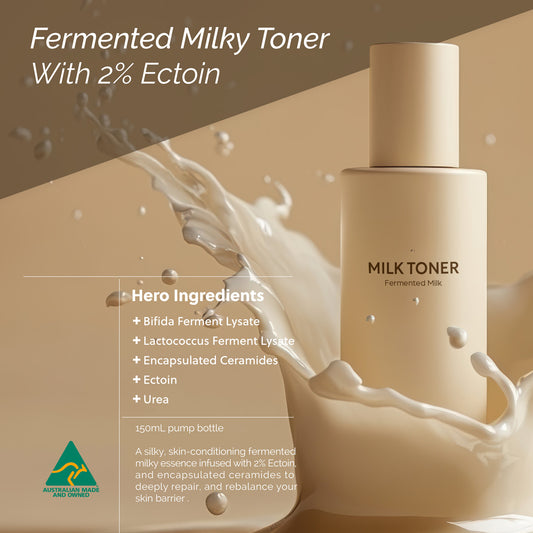
$0.00 USDSale price$49.00 USD Save $-49.00 USD (%)Unit priceperFermented Milky Toner
-
Regular price$37.00 USDRegular priceSale price$37.00 USD Save $-37.00 USD (%)Unit priceper
Daily Face Hydrator
-
Regular price$22.00 USDRegular priceSale price$22.00 USD Save $-22.00 USD (%)Unit priceper
Gel Cleanser
in your cart -
Regular price$34.00 USDRegular priceSale price$34.00 USD Save $-34.00 USD (%)Unit priceper
Milk Cleanser
-
Regular price$43.00 USDRegular priceSale price$43.00 USD Save $-43.00 USD (%)Unit priceper
Water Bomb Face Cream
-
Regular price$24.00 USDRegular priceSale price$24.00 USD Save $-24.00 USD (%)Unit priceper
Green Envy AHA Serum