Dr. Barbara Sturm The Good C combines a 5% vitamin C complex with zinc PCA, botanical ingredients and a moisture-supporting base. We explore the formula, explain the ingredient research and consider who this premium serum might suit.
FORMULA NOTES / VITAMIN C SERUM
Dr. Barbara Sturm
The Good C
A closer look at its vitamin C complex, zinc PCA, botanical ingredients and moisture-supporting base.
A formulation-based review
Full ingredient list (INCI)
aqua/water/eau, aloe barbadensis leaf juice, glycerin, tetrahexyldecyl ascorbate, lactobacillus/portulaca oleracea ferment extract, dicaprylyl carbonate, prunus armeniaca (apricot) kernel oil, ascorbyl glucoside, olea europaea (olive) leaf extract, sodium hyaluronate, terminalia ferdinandiana fruit extract, ascorbic acid, citric acid, leuconostoc/radish root ferment filtrate, helianthus annuus (sunflower) seed oil, zinc pca, phenoxyethanol, cetearyl alcohol, hydrogenated vegetable glycerides, potassium cetyl phosphate, xanthan gum, hydrogenated palm glycerides, sodium sulfite, ethylhexylglycerin, sclerotium gum, tocopherol
Source: MECCA Australia, cross-checked against the brand ingredient list on 30 October 2026. Published order retained; punctuation normalised. Check the packaging for your supplied formula.

The focus
Radiance, uneven-looking tone & moisture support
The format
30 mL milky serum
Price snapshot
A$262MECCA · checked 30 Oct 2026
Worth knowing
5% vitamin C complex + zinc PCA
| Product | Formulation Rating | Value Rating | Overall Rating |
|---|---|---|---|
| Dr. Barbara Sturm5% vitamin C complex · pure L-AA share undisclosedA$262.00 · 30 mL |
★★★☆☆Antioxidant
★★★☆☆Pigment Signalling
★★★★★Hydration
|
price onlyA$87.33 per 10 mL; price-only because L-ascorbic acid content is undisclosed. |
A vitamin C serum with a moisturising foundation
The Good C brings together tetrahexyldecyl ascorbate, ascorbyl glucoside and ascorbic acid in a milky serum. Alongside its vitamin C system are zinc PCA, fermented purslane, olive leaf extract and Kakadu plum extract. Glycerin, sodium hyaluronate and a small lipid phase give the formula a clear moisture-supporting role.
From a formulation perspective, the appeal is the balance between treatment ingredients and skin feel. Water-binding ingredients can help skin look less dehydrated, while oils and emollients soften the surface. This is a daily radiance-and-conditioning approach rather than a formula built around a high disclosed dose of free L-ascorbic acid.
Who might it suit?
- Dull or uneven-looking skin: the vitamin C ingredients provide a brightening-oriented treatment step.
- Normal, combination or dry skin seeking a milky serum: the combination of humectants and emollients supports a softer, moisturised feel.
- People who prefer no added fragrance: neither parfum nor aromatic essential oils appear in the ingredient list.
- People seeking a derivative-containing vitamin C option: THD ascorbate and ascorbyl glucoside offer a different formulation approach from a high-percentage free-acid serum.
Sensitive skin may appreciate the fragrance-free, moisture-supporting design, but individual tolerance still matters. Introduce it gradually if your skin is reactive. Very dry skin may need a separate moisturiser.
Apply according to the brand directions, avoiding the eye area and allowing it to absorb before the next step. Use broad-spectrum sunscreen in the morning.
What does the 5% declaration mean?
The brand describes a 5% vitamin C complex. The formula lists an oil-soluble ester, tetrahexyldecyl ascorbate; a glucose-linked derivative, ascorbyl glucoside; and ascorbic acid itself. Kakadu plum extract is also part of the brand’s botanical vitamin C story.
The individual proportions are not disclosed. The headline therefore should not be read as 5% of each form, or as a measured 5% free L-ascorbic acid dose. The ingredients contribute different chemistries, and the overall vehicle also matters. Brand product information.
Ingredients grouped by function
Ingredients are grouped by their estimated primary role in this formula; some have more than one function.
| Function | Ingredients | Role in formula |
|---|---|---|
| Function: Primary Actives | Ingredients: tetrahexyldecyl ascorbate, ascorbyl glucoside, ascorbic acid, zinc pca | Role in formula: Vitamin C forms and zinc PCA contribute brightening, antioxidant-oriented and skin-conditioning roles. |
| Function: Supporting Antioxidants | Ingredients: tocopherol | Role in formula: Vitamin E adds lipid-phase antioxidant support. |
| Function: Hydration Actives | Ingredients: glycerin, sodium hyaluronate | Role in formula: Bind water and support a hydrated surface feel. |
| Function: Botanical Extracts and Ferments | Ingredients: aloe barbadensis leaf juice, lactobacillus/portulaca oleracea ferment extract, olea europaea (olive) leaf extract, terminalia ferdinandiana fruit extract | Role in formula: Aloe, fermented purslane, olive leaf and Kakadu plum contribute conditioning and botanical support. |
| Function: Natural Emollients | Ingredients: prunus armeniaca (apricot) kernel oil, helianthus annuus (sunflower) seed oil | Role in formula: Plant oils soften the surface and support the lipid phase. |
| Function: Other Emollients | Ingredients: dicaprylyl carbonate, cetearyl alcohol, hydrogenated vegetable glycerides, hydrogenated palm glycerides | Role in formula: Provide slip, softness and structure. |
| Function: Emulsifier | Ingredients: potassium cetyl phosphate | Role in formula: Helps maintain the oil-and-water mixture. |
| Function: Texture Support | Ingredients: xanthan gum, sclerotium gum | Role in formula: Build consistency and application feel. |
| Function: Preservation Support | Ingredients: leuconostoc/radish root ferment filtrate, phenoxyethanol, ethylhexylglycerin | Role in formula: Support the formula’s microbial protection. |
| Function: pH and Formula Support | Ingredients: citric acid, sodium sulfite | Role in formula: Help control acidity and protect formulation stability. |
| Function: Solvent | Ingredients: aqua/water/eau | Role in formula: The aqueous base. |
The key ingredients, explained
| Ingredient | What it contributes |
|---|---|
| Ingredient: Vitamin C complex · 5% | What it contributes: Brightening and antioxidant-oriented support. Combines different vitamin C chemistries, with the individual ingredient percentages undisclosed. |
| Ingredient: Tetrahexyldecyl ascorbate | What it contributes: Oil-soluble vitamin C derivative. Fits into the serum’s lipid phase. Its behaviour and conversion depend on the tested material and formulation, so it should be considered on its own evidence. |
| Ingredient: Ascorbyl glucoside and ascorbic acid | What it contributes: Additional vitamin C forms. Ascorbyl glucoside is a glucose-linked derivative; ascorbic acid is free vitamin C. Their inclusion adds different formulation options without disclosing a specific free-vitamin-C amount delivered to skin. |
| Ingredient: Zinc PCA | What it contributes: A supporting active with laboratory skin research. Studied in fibroblasts for effects on collagen-related pathways and a vitamin C transporter. That provides a rationale for its inclusion alongside vitamin C. |
| Ingredient: Glycerin, sodium hyaluronate and aloe juice | What it contributes: Water-binding comfort. Help support hydration and a more supple surface feel. |
| Ingredient: Fermented purslane, olive leaf and Kakadu plum | What it contributes: Botanical support. Add conditioning and antioxidant-oriented ingredients. Fermented purslane is a distinct material from an ordinary purslane extract. |
| Ingredient: Apricot kernel oil, sunflower oil and emollients | What it contributes: Softness and texture. Complement the humectants with a lipid phase that helps skin feel smoother and less dry. |
Vitamin C and zinc in a moisture-supporting serum
The hydrating base deserves as much attention as the vitamin C headline. Glycerin and hyaluronate bind water; the oils, ester emollient and fatty alcohol provide softness and structure. Together, they make this a more conditioning formulation than a simple watery active solution.
Zinc PCA is a thoughtful supporting ingredient. Its laboratory evidence offers a specific biological rationale for pairing it with vitamin C, while the botanicals and tocopherol broaden the antioxidant-oriented design. The full combination is intended to balance radiance support with comfortable daily use.
Product clinical and consumer testing
The reviewed brand and Australian retailer pages describe brightening, antioxidant and hydration benefits, but do not publish an identifiable finished-product study with a participant count, duration and numerical outcome. Customer reviews are separate from controlled clinical or structured consumer-testing results.
The ingredient research below helps explain the formulation choices. It should not be presented as a trial of The Good C itself. Brand claims and product information · MECCA Australia product listing.
What ingredient research tells us
These studies concern individual ingredients or other formulations, not this finished serum.
Zinc PCA and vitamin C biology
A study using cultured human dermal fibroblasts found that zinc PCA reduced UVA-triggered AP-1 activation and MMP-1 production. It also increased expression of the vitamin C transporter SVCT2 and type I collagen production. This is useful laboratory support for the pairing, but it does not measure how much vitamin C this serum delivers through human skin. Takino and colleagues, 2012.
THD ascorbate depends on its formulation
A 2021 laboratory study found that THD ascorbate was vulnerable to singlet-oxygen exposure and that acetyl zingerone improved its stability and some biological effects in the tested systems. Acetyl zingerone is not listed in The Good C. The useful lesson is that an oil-soluble vitamin C derivative should be assessed within its complete formula, rather than assuming identical performance across products. Swindell and colleagues, 2021.
Ascorbyl glucoside and pigmentation
A double-blind half-face study in 27 Japanese women tested a 28% ascorbyl glucoside–arginine complex for 24 weeks and reported improvements in solar-lentigo pigmentation. This was a specific high-concentration complex, not plain ascorbyl glucoside at an undisclosed dose. It provides context for derivative research without establishing the performance of this serum. Controlled pigmentation study, 2024.
Our assessment
The Good C combines a vitamin C blend, zinc PCA, humectants and emollients in a conditioning, fragrance-free base. This serum earns an Overall Rating of 2.25 stars in our comparison of 15 ascorbic acid vitamin C serums.
At the comparison snapshot price of A$262 for 30 mL (1 November 2026), the cost is A$87.33 per 10 mL, the highest volume-normalised price in this group. The disclosed 5% is a mixed vitamin C complex, not a 5% L-ascorbic acid concentration. Because the individual L-ascorbic acid share is unknown, value is assessed on price alone and the Overall Rating carries that limitation. Its lower antioxidant and pigment scores reflect this concentration uncertainty within an ascorbic-acid-focused comparison, not proof of poorer clinical results.
The comparison therefore cannot establish concentration-adjusted value on the same basis as serums with a disclosed pure-ascorbic-acid dose. At this premium price, its appeal rests on the conditioning texture, fragrance-free base and moisture support rather than a clearly quantified ascorbic acid concentration. Those qualities may suit individual preferences, but it is a less compelling choice when the priority is value for a known vitamin C dose.
Further reading
Products for Dry & Dehydrated Skin
-
Regular price$79.00 AUDRegular price
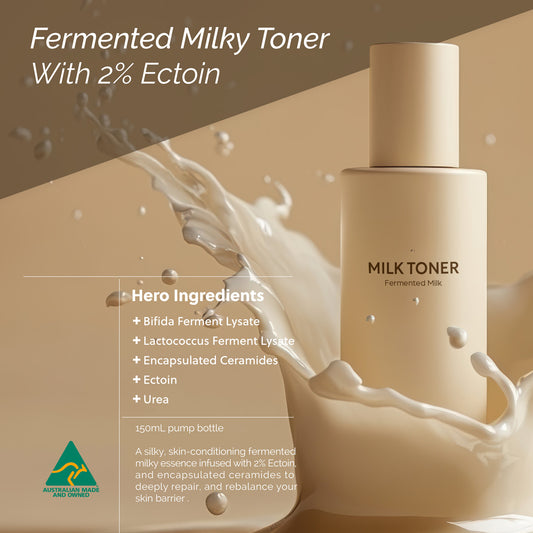
$0.00 AUDSale price$79.00 AUD Save $-79.00 AUD (%)Unit priceperFermented Milky Toner
-
Regular price$59.00 AUDRegular priceSale price$59.00 AUD Save $-59.00 AUD (%)Unit priceper
Daily Face Hydrator
-
Regular price$36.00 AUDRegular priceSale price$36.00 AUD Save $-36.00 AUD (%)Unit priceper
Gel Cleanser
-
Regular price$55.00 AUDRegular priceSale price$55.00 AUD Save $-55.00 AUD (%)Unit priceper
Milk Cleanser
-
Regular price$69.00 AUDRegular priceSale price$69.00 AUD Save $-69.00 AUD (%)Unit priceper
Water Bomb Face Cream
-
Regular price$39.00 AUDRegular priceSale price$39.00 AUD Save $-39.00 AUD (%)Unit priceper
Green Envy AHA Serum